0
0
Scientists: active industrial development did not damage vegetation
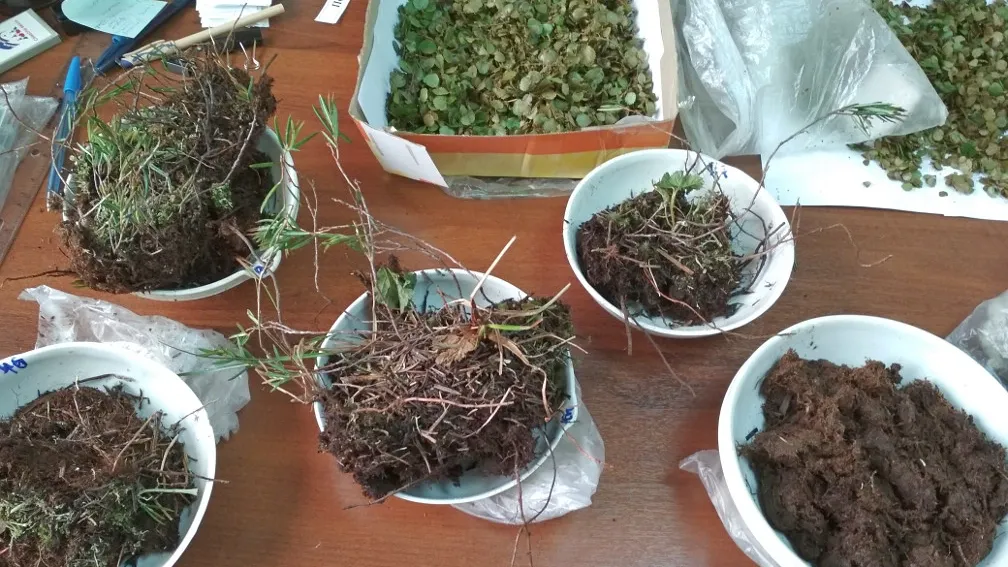
The scientific center for study of the Arctic is summarizing the results of bio-monitoring of ecosystem pollution. In 2019 scientists selected 75 vegetation samples at the research sites “Gydansky” in Tazovskiy district, “Verkhne-Tazovsky” in Krasnoselkoup district and “Nadymskiy”, as well as at the license areas of the South-Tambeyskoye and Yarudeyskoye oil and gas fields, in the buffer zone of the Sredne-Khulymskoye oil field. The collected samples were examined for the presence of heavy metals and other pollutants in the chemical analysis laboratory of the scientific center. The results show that the vegetation on the license areas does not contain dangerous concentrations of heavy metals, as the scientific center for study of the Arctic informs.
“Monitoring of the state of vegetation is an effective method to evaluate the level of anthropogenic load on the environment. The presence, state and behavior of individual plant species or communities can be used to evaluate natural or anthropogenic changes in the environment, as well as the presence and concentration of pollutants”, commented Yelena Agbalyan, doctor of biological sciences, the head of the sector of ecological and biological research at the scientific center for study of the Arctic.
At the research sites and on the area of the active extractive fields the scientists selected at least three 100-square-meter plots with the vegetation specific for the landscape. The features of the terrain and the wind rose were taken into account. The vegetation samples were collected in the middle of the growing season in dry weather. Leaves of silver and dwarf birch, woolly willow and grayleaf willow, bark of Siberian larch and needles of pine, leaves of cranberries, ledum, aboveground shoots of grasses, lichens and mosses were selected. In the chemical analysis laboratory the selected samples were studied for the content of chromium, cobalt, nickel, copper, zinc, vanadium, arsenic and other elements.
The studies have shown that the concentration on the entire number of heavy metals in the vegetation samples from the license areas is low. Small copper excesses were found in ground shoots of grasses, mosses and lichens.
The results of the study of the vegetation samples collected at the background research sites - in places that are not subject to anthropogenic influence - will be used in the future to develop regional environment quality standards and to establish the maximum permissible concentration of heavy metals.
The scientific center for study of the Arctic explains that heavy metals in high concentrations are toxic for living organisms, but in optimal quantities are necessary for metabolism, growth and development of plants.
0
0
Теги: